Our research focuses on multimodal intelligence and perception systems
Research on integrating vision, language, and other modalities for intelligent perception systems.
Developing Vision-Language-Action (VLA) model for autonomous robot.
Advanced research in semantic segmentation, object detection, and scene understanding.
Applying AI and deep learning to medical imaging, diagnosis, and healthcare applications. Delving into genomics and protein design with AI.
Publishing cutting-edge research at top-tier conferences including CVPR, ICCV, ECCV, and NeurIPS.
Working with international collaborators and industry partners on innovative AI solutions.
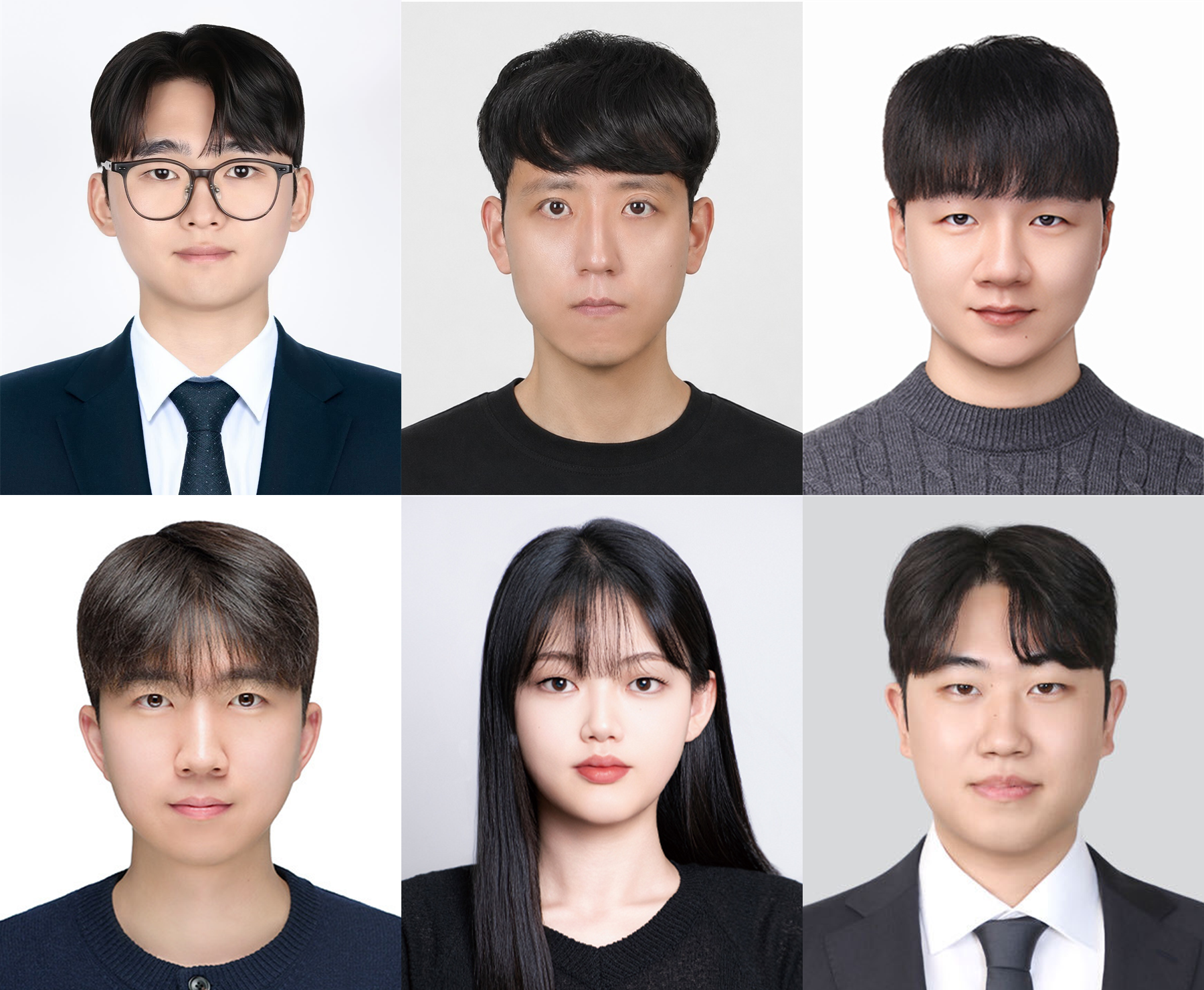
MIP Lab (Jaeil Park, Hyobin Choi, Sangjin Lee) placed 1st in the competition track of the ICRA 2026 Workshop on Field Robotics — GOOSE 2D Fine-Grained Semantic Segmentation Challenge, focusing on robust scene understanding in unstructured outdoor and off-road environments. Co-advised by Dr. Hyungtae Lim (MIT SPARK Lab).
MIP Lab has been selected for the MSIT-sponsored 「2026 Future Convergence Science & Technology Development Project (Future Promising Convergence Pioneer)」 — 'Development of Group Perception-Understanding-Cooperation based Autonomous Operation Technology for Humanoid Swarm Tasks'.
MIP Lab has been selected for the NIPA-sponsored 「Development and Demonstration of AIoT Service for Early Detection and Response to Water Quality Anomalies Using Multimodal Camera-based On-device AI Drones」 project (500M KRW).
MIP Lab has been selected for the 「Advanced GPU Utilization Support Program」.
We welcome a new MS student (Sangjin Lee) and new undergraduate students to MIP Lab.
A paper from MIP Lab is accepted to CVPR 2026. <Delta velocity rectified flow for text-to-image editing, Gaspard Beaudouin, Minghan Li, Jaeyeon Kim, Sung-Hoon Yoon*, Mengyu Wang*>
MIP Lab has been selected as a beta service participant for the 「Advanced GPU Utilization Support Program」.
Multimodal Intelligence and Perception (MIP) Lab has launched at DGIST EECS.